
Review Essay in Contemporary Psychoanalysis
In a Review Essay in Contemporary Psychoanalysis, the Journal of the William Alanson White Institute, Pascal Sauvayre addresses the question “Is Laplanche's Thought Relational?”
I am proud both of the praise and of the intelligent critique Pascal brings to the translations, but most important is his thoughtful discussion of his topic. I hope that excerpting a couple of paragraphs will serve as a seduction to read his thoughtful article. He begins by highlighting “why it is important for ‘us’, particularly us American relationalists, to read Laplanche… some of the most important reasons [include]:
“The first is to be found in his unique "return to Freud" (very different from Lacan's). In contrast to our own tradition, where the not uncommon attitude is that Freud has either been disposed of or left behind, Laplanche's return to Freud is a literal return through careful re-readings of Freud's texts in order to "work" (and rework) them by engaging the challenges of translation. This close study of his texts lead him to revisit some of ''our own" cherished aspects of Freud's thought …
“Reconsidering such concepts as the unconscious, analytic neutrality, analytic and/versus therapeutic action, sexuality, and seduction from the perspective of a Laplanchian "idiolect" (a term he uses to mean an intellectual dialect) will provide us with a fresh perspective on our own relational English. There is nothing like learning a foreign language to better appreciate one's mother tongue.
Translations of two more volumes of Laplanche’s work have been published since those covered in Pascal’s essay: New Foundations for Psychoanalysis and Après-coup.
New Foundations (1987) is rightly understood as Laplanche’s central text. In discussing the order in which he wanted me to publish the translations, Laplanche called it “the hinge of my work.”
Après-coup appeared in 2006 when he lightly edited his lectures from 1989-1990. It is, to my mind, a magnificent and accessible work of scholarship, or perhaps I should say, an opportunity to see the mind of a magnificent scholar at work.
In celebration of this review essay by Pascal Sauvayre, The Unconscious in Translation is offering a 20% discount on everything purchased from now until Labor Day by using the coupon code FREUD (all caps).
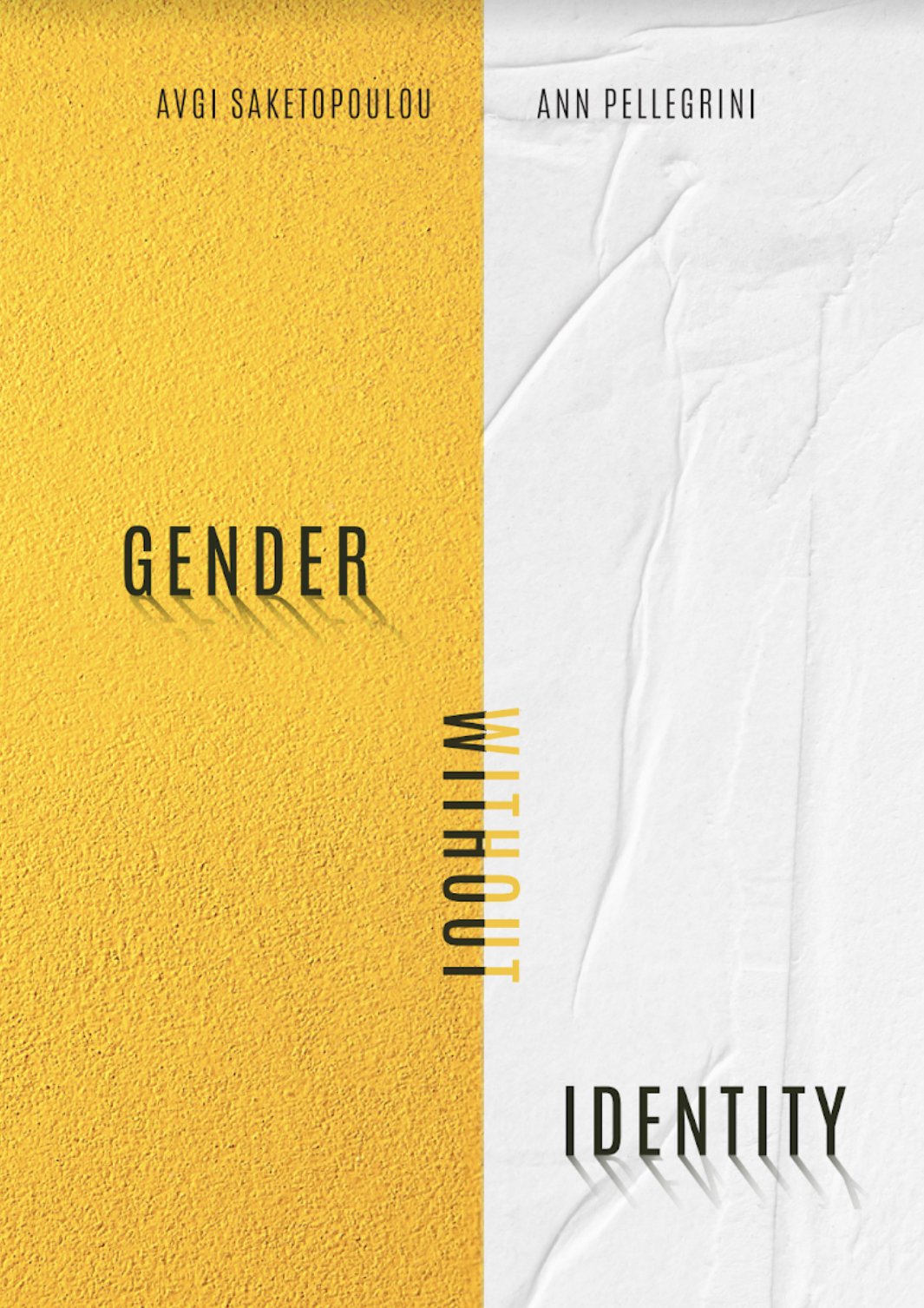
Gender Without Identity offers an innovative and at times unsettling theory of gender formation. Rooted in the metapsychology of Jean Laplanche and in conversation with bold work in queer and trans studies, Avgi Saketopoulou and Ann Pellegrini jettison “core gender identity” to propose, instead, that gender is something all subjects acquire -- and that trauma sometimes has a share in that acquisition. Conceptualizing trauma alongside diverse genders and sexualities is thus not about invalidating transness and queerness, but about illuminating their textures to enable their flourishing.
Written for readers both in and outside psychoanalysis, Gender Without Identity argues for the ethical urgency of recognizing that wounding experiences and traumatic legacies may be spun into gender. Such “spinning” involves self-theorizations that do not proceed from a centered self, but are nevertheless critical to psychic autonomy. Saketopoulou and Pellegrini draw on these ideas to offer clinical resources for working with gender complexity and for complexifying (what is seen as) gender normativity.
223 pages.

The unpublished Russian diary and letters of Sabina Spielrein represent a milestone for academics, scholars, historians, and psychoanalysts whose interest in the most enigmatic woman to have pioneered psychoanalysis and developmental psychology in the first part of the 20th century has never ceased to grow after she was rediscovered in the mid-1970s. These Primary sources, which include unreleased drawings and notes, were patiently exhumed and translated by Lothane from New York to Russia and across Europe over two decades, with the collaboration of Spielrein’s grandnephew, Vladimir Shpilrain. Thoroughly presented and commented on by Lothane, this book will also fascinate a public increasingly drawn to the legacy of a feminist figure whose intimate correspondence provides an invaluable testimony from her childhood to the most ignored episodes of an extraordinary life between passions, strokes of genius, and tragedies. Sabina Spielrein was last seen with her daughters, in 1942, in a column of 27,000 Jews marched by the Nazis to be murdered in Zmiyevskaia ravine, Rostov’s Babi Yar.
470 pages.
NEW! Also available via Amazon

Freud and the Sexual is the translation of Laplanche’s Sexual:La sexualité élargie au sens freudien, his work from 2000 to 2006, and a groundbreaking book by the French psychoanalyst Jean Laplanche that challenges traditional interpretations of Sigmund Freud's theories on sexuality. In this book, Laplanche argues that Freud's work has been misunderstood and misinterpreted, and that his ideas on sexuality are much more complex and nuanced than is commonly thought.
Laplanche draws on his extensive knowledge of Freud's writings and the history of psychoanalysis to explore the origins and evolution of Freud's theories on sexuality. He examines the ways in which Freud's ideas were shaped by his personal experiences, his cultural and historical context, and the influence of his patients.
Laplanche also presents a compelling critique of the "Oedipus complex," which has long been considered a central tenet of Freudian theory. He argues that this concept has been overemphasized and oversimplified, and that it has limited our understanding of the complexities of human sexuality.
Through his rigorous analysis and insightful commentary, Laplanche offers a fresh perspective on Freud's ideas, challenging readers to rethink their assumptions about human sexuality and the role of psychoanalysis in understanding it.
Freud and the Sexual is a must-read for anyone interested in the history of psychoanalysis, the evolution of Freud's ideas, or the complexities of human sexuality. It is a masterful work of scholarship and a valuable contribution to the ongoing debate about the nature of the human psyche.

Between Seduction and Inspiration is a fascinating book written by the influential French psychoanalyst Jean Laplanche. In this book, Laplanche explores the complex interplay between the seductive and inspiring aspects of human experience.
Laplanche argues that human beings are constantly caught between the two poles of seduction and inspiration, and that these forces shape our identity and our relationships with others. He delves into the role of the unconscious, exploring how it operates in our lives and how it shapes our perceptions and experiences.
The book draws on a range of sources, from Freudian psychoanalysis to the works of philosophers such as Jean-Jacques Rousseau and Friedrich Nietzsche. Laplanche also incorporates insights from literature, mythology, and anthropology, demonstrating the breadth and depth of his thinking.
Written in Laplanche's characteristically clear and accessible style, Between Seduction and Inspiration is a must-read for anyone interested in psychology, philosophy, or the human condition. It offers profound insights into the mysteries of the mind and the complexities of human experience, making it a valuable resource for both professionals and lay readers alike.

The Unfinished Copernican Revolution is a groundbreaking book by the French psychoanalyst Jean Laplanche that challenges traditional views of psychoanalysis and the nature of the human psyche. In this book, Laplanche presents a bold and innovative theory of psychic life, drawing on his extensive knowledge of Freudian theory and his own clinical experience.
Laplanche argues that the human psyche is not a self-contained entity, but is constantly in a state of flux, shaped by the complex interplay between internal and external factors. He proposes a new model of psychic life that emphasizes the role of external influences, including social and cultural factors, in shaping the development of the psyche.
The book's title is a reference to the work of astronomer Nicolaus Copernicus, who famously challenged the prevailing view of his time that the Earth was the center of the universe. Laplanche similarly seeks to upend traditional ideas about the nature of the human psyche, arguing that it is not a self-contained entity but is rather shaped by the complex interactions between internal and external factors.
Through his innovative theories and insightful commentary, Laplanche offers a fresh perspective on the field of psychoanalysis, challenging readers to rethink their assumptions about the nature of the human psyche and the role of psychoanalysis in understanding it.
The Unfinished Copernican Revolution is a must-read for anyone interested in the field of psychoanalysis, the nature of the human psyche, or the intersection of psychology and culture. It is a powerful work of scholarship and a valuable contribution to the ongoing debate about the complexities of the human mind.

Après-coup was awarded the 2018 Book Prize of the American Board and Academy of Psychoanalysis

The appearance of New Foundations for Psychoanalysis in 1987 marked the beginning of five years that may be the period of Laplanche’s greatest synthetic creativity during which he articulated the central concepts of his thinking. Along with New Foundations this period saw the seminar on après-coup of 1989-1990—later published as Problématiques VI; the seminar of 1991-1992 published as Problématiques VII: Le fourvoiement biologisant de la sexualité chez Freud and, in an English translation by Donald Nicholson-Smith, as The Temptation of Biology: Freud’s Theories of Sexuality and much else.
New Foundations is a synthesis of Laplanche’s conceptual research going back to Life and Death in Psychoanalysis of 1970 and, before that, to works co-authored with J.-B. Pontalis and with Serge Leclaire. Referring to Problématiques I through Problématiques V (1970 – 1984), Laplanche writes, “Now the moment has come to show how my positions are connected with each other.” He certainly does just that and, most importantly, New Foundations was the first major presentation of the General Theory of Seduction (GTS) that guided his work for the rest of his life even as he continued to refine it.
Later, from a different angle Laplanche refers to the GTS as the Fundamental Anthropological Situation. The GTS will provide the basis for unearthing and extending Freud’s translational model of repression leading Laplanche to propose “a translational model of après-coup and, more generally, a translational model of the theory of seduction and even a translational model of the constitution of the human being.” He will speak of translational theories of psychic trauma, of infantile sexuality, and ultimately, of translation as a mechanism at the origin of the human subject as a self-narrating, self-theorizing creature.

The Temptation of Biology is one of Laplanche’s central achievements in the latter half of his career: a major monograph on sexuality. Originally published in 1987 as Le fourvoiement biologisant de la sexualité chez Freud,
republished in 1999 as La sexualité humaine and as Problématiques VII in
2006, in this volume it is followed by Laplanche’s 1997 talk at the University
of Buenos Aires when he was awarded the title Doctor Honoris Causa, a
paper which addresses a key aspect of the monograph: “Biologism and
Biology.”
Click here to read JAPA review of this title.
Laplanche’s work is widely recognized as offering what may be the most
important – certainly the most coherent – development and correction of
Freud’s theories of sexuality. Building upon the 1984 volume New
Foundations for Psychoanalysis, which Laplanche called the "hinge" of his
theorizing, this book examines the origins of infantile sexuality. Laplanche
works to demystify and demythologize the cult of biology within the work of Freud and his successors, to develop a theory of sexuality that both
challenges and restores Freud's own foundational insights. In this remarkable translation, the text remains just as clear and illuminating as the original French. It is stimulating, rigorous, and (perhaps atypical for a work of theory) a pleasure to read.
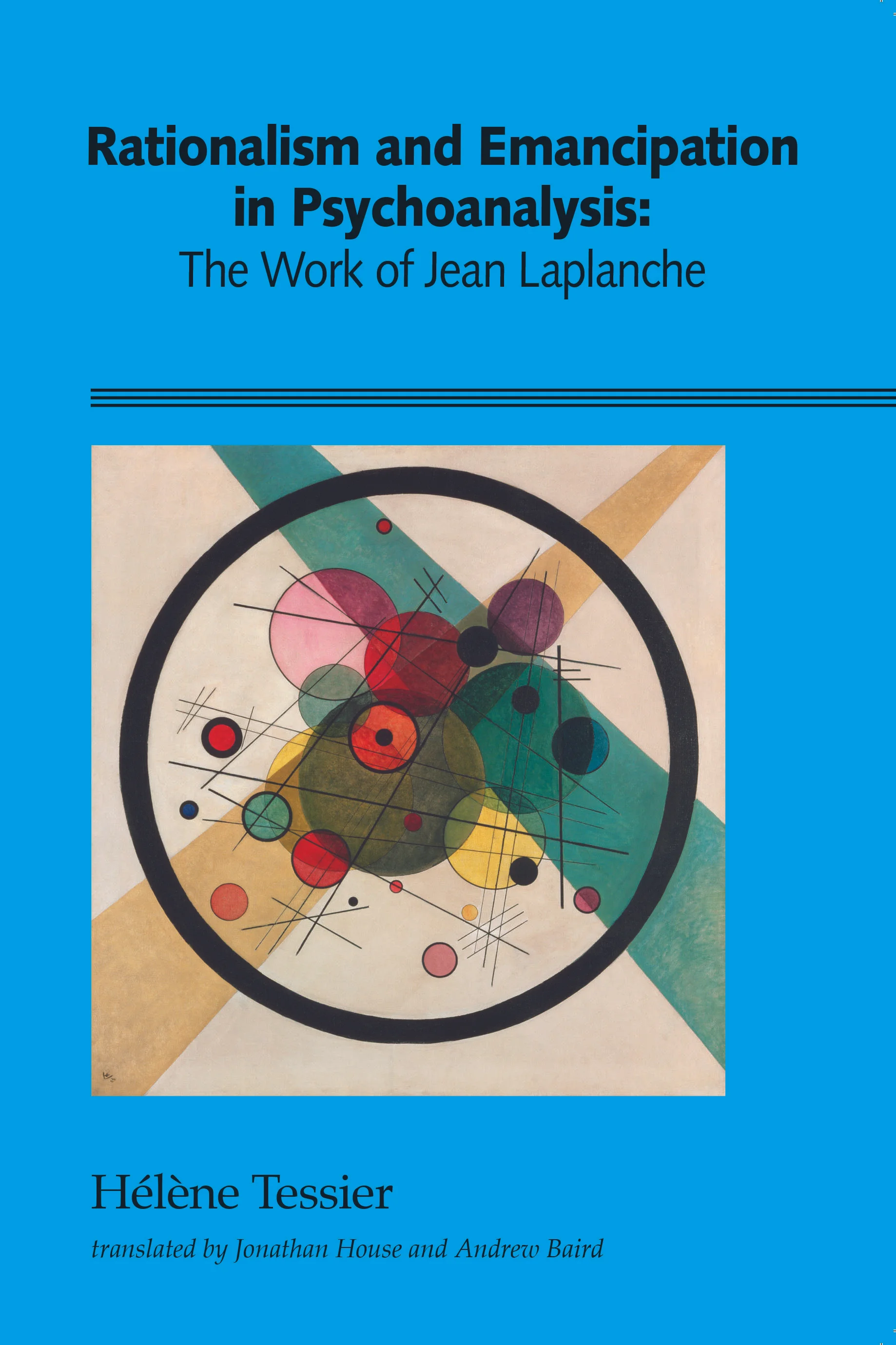
The definition of psychoanalysis is a question largely hidden by cultural conditions that favor eclecticism. Demonstrating the importance of psychoanalysis can become meaningless if one does not specify what one means by “psychoanalysis.” For instance, could we seriously argue that Lacanian approaches are examples of the same conception of psychoanalysis as that embodied in relational approaches based on attachment theory? Invoking the existence of a “common ground” of clinical practice is not convincing, unless one is persuaded that theory has no influence on practice. Analysts should not close ranks around the term “psychoanalysis” if it does not correspond to a shared reality. If such a reality does exist how can we judge whether it deserves our support?
Laplanche’s work has the merit of addressing these issues directly. It cannot be inserted into contemporary eclecticism. In fact, his thought involves a demand for coherence that makes it a polemical interlocutor of each of the principal contemporary orientations.
We must choose how to define the psychoanalytic field and its principal concepts, but what criteria should determine our choices? Laplanche’s thought falls within the rationalist tradition as can be seen in what Laplanche rightly considered his central contribution: The General Theory of Seduction and its links to the mode of action of psychoanalysis. The affiliation with rationalism constitutes one of the criteria that help establish this theory’s validity. That is the thesis of this book.
Adapted from the author’s Introduction.
By Dominique Scarfone and in critical conversation with Avgi Saketopoulou.
In one of his introductory lectures to psychoanalysis, Freud had this to say:
"It is In general not such a common thing for psycho-analysis to deny something asserted by other people; as a rule it merely adds something new-though no doubt it occasionally happens that this thing that has hit her to been overlooked and Is now brought up as a fresh addition Is In fact the essence of the matter." (Freud, 1916-17, p. 45)
The remark applies beautifully to the theory of communication or, for that matter, to the theory of human attachment. Psychoanalysis has nothing to deny in those areas of study, but it has probably something essential to add.